
FIFA World Cup 2026
The first 48-team men’s World Cup ended with Spain lifting the trophy after a 1–0 extra-time victory over Argentina. Explore every result, the completed bracket, final standings, teams, statistics, awards, local-time schedules and the stories that defined the tournament.
Spain conquer the first 48-team World Cup
Thirty-nine days of football across Canada, Mexico and the United States ended with a second world title for La Roja.
The 23rd men’s FIFA World Cup was played from 11 June to 19 July 2026. For the first time, 48 national teams competed in 12 groups of four, with the top two teams and eight best third-placed sides advancing to a new Round of 32. The expanded format produced 104 matches across 16 stadiums in three host countries.
Spain completed an unbeaten campaign by defeating defending champions Argentina 1–0 after extra time in the final at New York New Jersey Stadium. Substitute Ferran Torres scored the decisive goal in the 106th minute, securing Spain’s second men’s World Cup title and their first since 2010.
England claimed third place after beating France 6–4. Rodri received the Golden Ball, Kylian Mbappé won the Golden Boot with 10 goals, Unai Simón earned the Golden Glove, Pau Cubarsí was named Best Young Player, and the Netherlands received the Fair Play Trophy.
The top four
Spain finished first, Argentina second, England third and France fourth.
1
Champions
Spain
Second men’s World Cup title
2
Runners-up
Argentina
Second consecutive final
3
Third place
England
Beat France in a ten-goal match
4
Fourth place
France
Mbappé won the Golden Boot
New York New Jersey Stadium
After extra time · Ferran Torres 106′
Miami Stadium
Bukayo Saka scored a hat-trick as England secured bronze.
Results and completed knockout bracket
Review every score and follow the route that carried Spain from the group stage to the trophy.
Completed knockout bracketEvery matchup from the Round of 32 through the final.
Final awards and winnersThe official individual and team honours.
Interactive final bracket











All 104 tournament matches are included, from the opening game to Spain’s extra-time final win and England’s 6–4 third-place victory.
The tournament’s leading performers
Spain dominated the individual honours, while Kylian Mbappé finished as the leading scorer.
Golden BootKylian MbappéThe France captain led the scoring chart with 10 goals.
Golden GloveUnai SimónSpain’s goalkeeper won the award after a title-winning campaign.
Best Young PlayerPau CubarsíThe Spain defender received the tournament’s young-player award.
All tournament statisticsGoals, assists, cards, player rankings and team performance.
Goalkeeper statisticsSaves, clean sheets and goalkeeper performance.
Referees and disciplineMatch officials, VAR and disciplinary statistics.
Messi vs Ronaldo World Cup recordsA historical comparison of their World Cup careers.
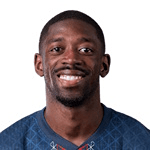
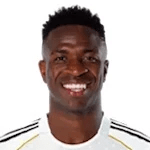
Final leading scorers







Final group standings
The completed tables for all 12 groups, with direct links to every group and team.
Best third-placed teamsHow the eight third-place qualifiers reached the Round of 32.
Tiebreaker rulesThe criteria used to separate teams level on points.
Group A
Mexico won the group
- 1 Mexico 9 pts
- 2 South Africa 4 pts
- 3 South Korea 3 pts
- 4 Czech Republic 1 pt
Group B
Switzerland won the group
- 1 Switzerland 7 pts
- 2 Canada 4 pts
- 3 Bosnia & Herzegovina 4 pts
- 4 Qatar 1 pt
Group C
Brazil won the group
Group D
USA won the group
Group E
Germany won the group
- 1 Germany 6 pts
- 2 Ivory Coast 6 pts
- 3 Ecuador 4 pts
- 4 Curaçao 1 pt
Group F
Netherlands won the group
- 1 Netherlands 7 pts
- 2 Japan 5 pts
- 3 Sweden 4 pts
- 4 Tunisia 0 pts
Group G
Belgium won the group
- 1 Belgium 5 pts
- 2 Egypt 5 pts
- 3 Iran 3 pts
- 4 New Zealand 1 pt
Group H
Spain won the group
- 1 Spain 7 pts
- 2 Cape Verde Islands 3 pts
- 3 Uruguay 2 pts
- 4 Saudi Arabia 2 pts
Group I
France won the group
Group J
Argentina won the group
Group K
Colombia won the group
- 1 Colombia 7 pts
- 2 Portugal 5 pts
- 3 Congo DR 4 pts
- 4 Uzbekistan 0 pts
Group L
England won the group
All 48 participating teams
Open any team profile to explore its squad, players, fixtures and tournament data.
Browse all 48 teams Team profiles, squads and players
Argentina
Australia
Austria
Belgium
Bosnia & Herzegovina
Brazil
Canada
Cape Verde Islands
Colombia
Congo DR
Croatia
Curaçao
Czech Republic
Ecuador
Egypt
England
France
Germany
Ghana
Haiti
Iran
Iraq
Ivory Coast
Japan
Jordan
Mexico
Morocco
Netherlands
New Zealand
Norway
Panama
Paraguay
Portugal
Qatar
Saudi Arabia
Scotland
Senegal
South Africa
South Korea
Spain
Sweden
Switzerland
Tunisia
Türkiye
USA
Uruguay
Uzbekistan
Match schedule by local time
Browse the complete fixture list in the timezone used by readers in your region.
Results after every fixtureMove from the fixture list to the completed results.
How matches were shownCountry-specific television and streaming information.
Popular local-time pages
India / IST
Eastern Time / EDT
Pacific Time / PDT
UK / BST
Central Europe / CET
Singapore / SGT
Australia / AEST
North America schedules 5 pages
South America schedules 9 pages
Europe schedules 7 pages
Africa schedules 7 pages
Asia & Middle East schedules 24 pages
Pakistan Time / PKT
Nepal Time / NPT
Bangladesh Time / BST
Sri Lanka Time / SLST
Bhutan Time / BTT
Myanmar Time / MMT
Indochina Time / ICT
China / Beijing Time
Hong Kong Time / HKT
Japan Time / JST
Korea Time / KST
Malaysia Time / MYT
Singapore Time / SGT
Brunei Time / BNT
Philippines Time / PHT
Western Indonesia Time / WIB
Central Indonesia Time / WITA
Iran Time / IRST
Israel Time / IST
Palestine Time / PSST
Arabia Standard Time / AST
UAE / Gulf Time
Uzbekistan Time / UZT
Venues and tournament setting
Explore the 16 stadiums, three host countries and the details behind the opening events and playing surfaces.
Stadium certification rulesHow venues were approved for World Cup matches.
The science behind World Cup pitchesHow playing surfaces were prepared across North America.
Opening ceremonyPerformers, time and venue details from the opening event.
Opening matchTeams, kickoff time and the first match of the tournament.
Host nations in World Cup historyHow host countries have performed across editions.
Format, rules and explainers
Understand the expanded competition, qualification system, match laws and tournament operations.
Tournament format
Officials, integrity and operations
Television and streaming guides
Country-specific viewing information published for supporters during the tournament.
AustraliaSBS, streaming and match-time guide.
FijiFBC channels and tournament viewing guide.
GreeceERT channels and ERTFLIX information.
Hong KongNow TV, ViuTV and match-time guide.
IndonesiaTVRI channels and live-coverage guide.
NepalHimalaya Sports HD, DGo and match-time guide.
New ZealandTelevision, streaming and match-time guide.
SingaporeTelevision channels and streaming guide.
VietnamVTV channels and live-stream guide.
Tickets and fan guides
Practical information for supporters who attended or followed the tournament.
Tournament timeline
The major stages and decisive moments from opening day to Spain’s title.
11–27 June — Group stageForty-eight teams competed across 12 groups of four.
28 June–7 July — Round of 32 and Round of 16The expanded World Cup introduced an additional knockout round.
9–11 July — Quarter-finalsFrance, Spain, England and Argentina reached the last four.
14–15 July — Semi-finalsSpain defeated France and Argentina overcame England.
18 July — Third-place matchEngland beat France 6–4 in Miami.
19 July — World Cup finalSpain defeated Argentina 1–0 after extra time.
19 July — AwardsRodri, Mbappé, Unai Simón and Pau Cubarsí received the leading individual honours.
FIFA World Cup 2026 FAQ
Answers to the most important questions about the champions, final, awards, format and records.
Who won the FIFA World Cup 2026?
Spain won the 2026 FIFA World Cup, defeating Argentina 1–0 after extra time in the final. It was Spain’s second men’s World Cup title after their first triumph in 2010.
What was the score in the 2026 World Cup final?
Spain beat Argentina 1–0 after extra time at New York New Jersey Stadium on 19 July 2026.
Who scored the winning goal in the final?
Ferran Torres scored the only goal in the 106th minute of extra time.
Which teams finished third and fourth?
England finished third after defeating France 6–4 in the third-place match. France therefore finished fourth.
Who won the Golden Ball at the 2026 World Cup?
Spain captain Rodri won the Golden Ball as the tournament’s best player. Lionel Messi received the Silver Ball and Kylian Mbappé won the Bronze Ball.
Who won the Golden Boot and how many goals did he score?
France captain Kylian Mbappé won the Golden Boot with 10 goals. Lionel Messi won the Silver Boot with eight, while Jude Bellingham received the Bronze Boot with seven.
Who won the Golden Glove and Best Young Player awards?
Spain goalkeeper Unai Simón won the Golden Glove, and Spain defender Pau Cubarsí was named the tournament’s best young player.
How many teams and matches were in the 2026 World Cup?
The tournament featured 48 teams and 104 matches. It was the first men’s World Cup played under the expanded 48-team format.
How did the 48-team format work?
The teams were divided into 12 groups of four. The top two teams in every group and the eight best third-placed teams qualified for a new Round of 32.
Which countries hosted the 2026 World Cup?
Canada, Mexico and the United States jointly hosted the tournament across 16 stadiums.
How many goals were scored and how many people attended?
The tournament produced 308 goals across 104 matches, while total attendance reached a record 6,810,966.
